Luz y Linda

1986
ART_0810
Medium
Painted wood, steel
Dimensions
2'2" x 12' x 2'6"

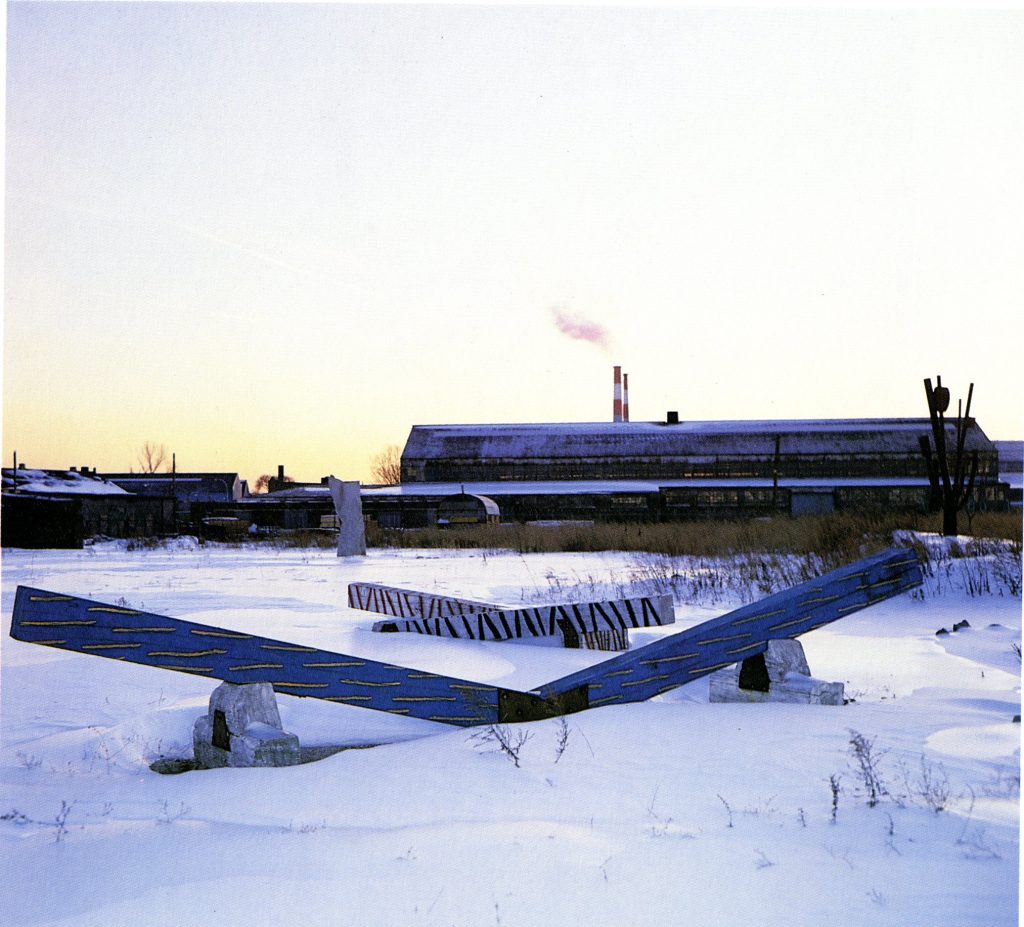
“Luz y Linda” and “River Rise” were constructed as Socrates Sculpture Park was being coaxed out of a vacant lot. The first time I walked out onto the land, it was a tangle of weeds dotted with rubble. I kept looking for something to stand on so that I could get an overview of the land meeting the river, but there were no rises. When I was invited to build sculpture benches for the park, I decided to build forms that would encourage people to climb and stand on, as well as sit and lie down upon them.

It was a treat to work on tthe site, chainsawing in the sun by the river in June. The raw energy of transformation was contagious. At the end of each day, some of my crew and I would startle fellow passengers as we boarded the subway, sunburned and exhausted, covered as we were with sawdust, but talking excitedly about the birth of a community park.

Videos

Sculptor Linda Fleming sits down with her son and DJ / sound designer / musician Luz Fleming to discuss their deep, decades-spanning ties to Socrates Sculpture Park. Together, they trace Socrates’ origins from Mark di Suvero and Isamu Noguchi’s early vision through its transformation from a derelict, rubble-strewn lot into a public sculpture park.
Starting from Linda meeting di Suvero in 1967 and his Front Street studio, she describes building the “Lucy Linda” and “River” benches in 1986 and the social-justice ethos Enrico Martignoni brought to the park by hiring locally. Luz recounts entering the park’s orbit as a teenager and young adult in the early-to-mid 1990s, living in a trailer on-site, serving as crew supervisor, learning heavy equipment and fabrication skills, and various vivid neighborhood anecdotes from the park’s early years.
Together, the mother and son pair reflect on Socrates as an incubator of creative freedom, its comlpex elationship with the surrounding Astoria community, and their hopes for preserving the park’s untamed spirit into the future.

Oral History

Oral History – Scott Pfaffman

Unable to load audio

Sculptor Scott Pfaffman sits down with Socrates Sculpture Park Artistic Director Shaun Leonardo to describe his early involvement with the Athena Foundation and the transformation of the Long Island City waterfront site into what became Socrates. Pfaffman traces his path from a struggling young sculptor with three pending commissions and no studio, to working alongside Mark di Suvero and Enrico Navarra at the Athena Foundation pier, to helping build out the park’s first exhibition grounds in the mid-1980s. He recounts the park’s scrappy, homemade origins including hauling logs, distributing truckloads of wood chips, building makeshift equipment, as well as personal stories about the artist-housing program. The interview closes with Pfaffman’s reflections on grief, ownership, and what he hopes for the park’s future.

Oral History – Owen Morrel

Unable to load audio

Sculptor Owen Morrel discusses with interviewer Paige Laino his participation in Socrates Sculpture Park’s inaugural exhibition (1985–86), including how he was connected to the park through arts patron Ruth Cummings and Whitney Museum director Adam Weinberg, and recounts installing his sculpture “Anchor” near the East River with founder Mark di Suvero. Morrel traces his path from ceramics training at the School of Visual Arts and Brooklyn Museum to metal sculpture, describing public art projects across 1970s–80s Manhattan and Brooklyn, including an unauthorized rooftop installation that landed on the cover of the Village Voice and a landmark-approved piece on the McGraw-Hill Building. He situates Socrates within the wider downtown New York art scene of the period, recalling personal connections to figures such as Julian Schnabel, Gordon Matta-Clark, Keith Haring, and Christo and Jeanne-Claude. The interview closes with reflections on his later life, career, and the loss of his wife, alongside his observations on how the freewheeling, low-cost art world of Manhattan no longer exists.